Families For Life | Thinking: School-Age Children
Starting primary school or preparing for school opens up many new learning opportunities for children. At this age, children are developing important thinking skills such as problem-solving, reasoning, remembering and understanding new ideas. While classroom learning becomes more structured, play remains one of the best ways for children to learn.
By spending time playing, talking and exploring with your child, you can support both their cognitive development and emotional well-being.
How Children Learn Best
Children aged 4 to 6 are naturally curious and eager to learn about the world around them. They learn best when they can explore, experiment and discover things for themselves.
Play helps children:
Solve problems and make decisions
Build memory and concentration
Develop creativity and imagination
Learn to plan, predict and reason
Strengthen social and communication skills
Playing together also helps you stay connected with your child as they adjust to new routines, friendships and learning experiences.
What You May Notice at This Age
As your child grows, you may see them:
Show strong interest in collecting objects or learning about favourite topics
Understand simple explanations and discussions
Follow rules and take turns during games
Become more independent when trying new activities
Ask many questions about how things work
Enjoy learning facts, conducting simple experiments and solving puzzles
Every child develops at their own pace, so focus on progress rather than comparisons.
Encouraging Thinking Through Everyday Play
You do not need expensive toys or formal lessons to support learning. Everyday activities can provide valuable opportunities for your child to think, question and problem-solve.
Try activities such as:
Explore Your Child's Interests
If your child is interested in animals, space, insects or transport, build on that curiosity. Borrow books from the library, visit places such as parks, nature reserves or museums, and encourage your child to share what they have learned.
Play Games Together
Board games, memory games, card games and simple word games help children practise planning, counting, reasoning and taking turns. Games such as "I Spy" also strengthen language and observation skills.
Read and Talk About Books
Reading together develops language and critical thinking. After reading a story, ask questions such as:
"Why do you think the character did that?"
"What do you think will happen next?"
"What would you have done?"
These discussions encourage deeper thinking and comprehension.
Build and Create
Construction toys, blocks, recycled materials and craft activities encourage children to design, experiment and solve problems. Let your child try different ideas before stepping in to help.
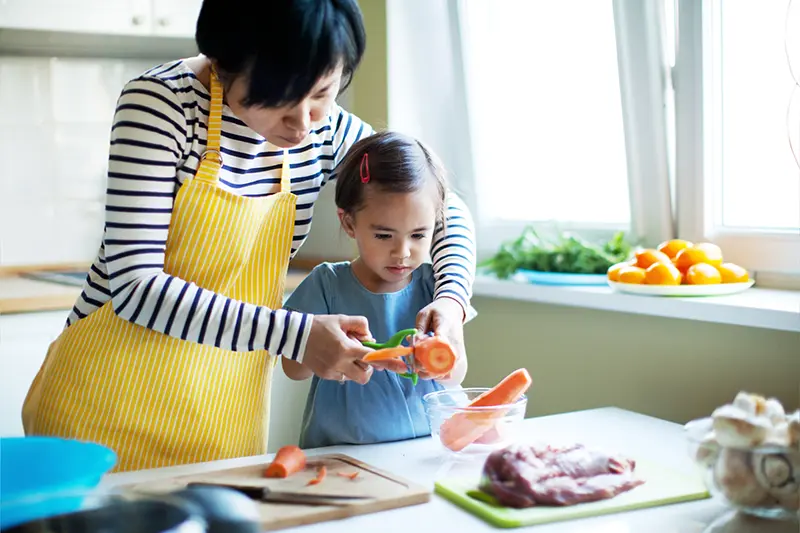
Cook Together
Simple cooking activities introduce concepts such as measuring, counting and comparing quantities. Following a recipe also helps children practise listening and sequencing skills.
Give Your Child Space to Learn
Children often learn more when they are given opportunities to work things out on their own. Instead of providing answers immediately, ask questions that encourage thinking, such as "What do you think we could try?" or "How else could we solve this problem?"
Be available to support and encourage, but allow your child to take the lead whenever possible.
Key Takeaway
A healthy lifestyle helps children think and learn more effectively. Ensure your child gets enough sleep, stays physically active and eats balanced meals. It is also helpful to set reasonable limits on screen time so that there is plenty of time for active play, reading and family interaction.
If you have concerns about your child's learning or development, speak with their preschool educator, school teacher or healthcare professional. Early support can help children build confidence and succeed in their learning journey.
By nurturing your child's curiosity and making learning part of everyday family life, you can help them develop the confidence and skills they need for school and beyond.